

October 28, 2026
When the Emergency Department Becomes the Behavioral Health Safety Net
A thought starter for healthcare engineers, facility leaders and planners ahead of the 2026 Midwest Healthcare Engineering Conference
For decades, the emergency department has served as healthcare’s front door when people have nowhere else to turn. Increasingly, that includes people experiencing a behavioral health crisis. U.S. emergency departments recorded roughly 155 million visits in 2022 alone (Centers for Disease Control and Prevention [CDC], 2025), and every one of those patients experienced spaces designed primarily around medical urgency.
Behavioral health has long been a consideration in emergency department design, yet the traditional emergency care model took shape well before today’s understanding of behavioral health needs. Emergency departments (EDs) are designed to quickly assess, diagnose and treat acute medical conditions. They are intentionally active environments, with frequent movement, alarms, clinical interventions and constant transitions. For someone experiencing a behavioral health crisis, many of the characteristics that make an emergency department effective for medical emergencies can work against the calm, low-stimulation environment needed for stabilization. Bright overhead lighting, hard surfaces that amplify noise, glass-front rooms facing busy corridors, exposed medical gas outlets, monitor cables and ceiling-mounted equipment are each deliberate decisions in support of medical care. Yet, each can also become a stressor or a safety risk when the patient in the room is in psychiatric crisis.
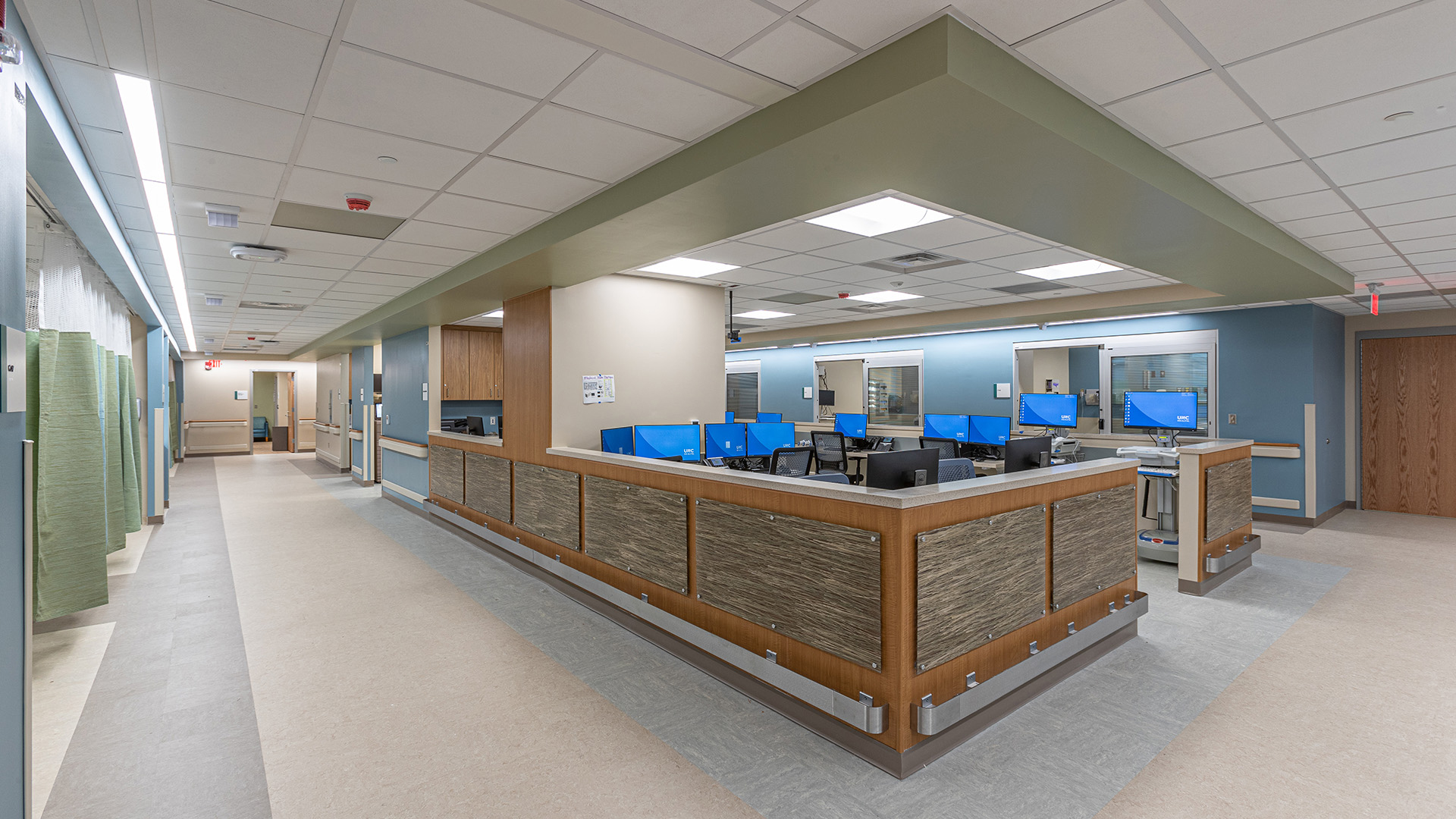
A Front Door That Has Become a Waiting Room
Across the country, emergency departments have increasingly become a critical part of the behavioral health safety net.
When outpatient resources are unavailable, a crisis escalates, or patients and families simply do not know where else to turn, the ED is often the most accessible destination. Once there, patients may wait days for an appropriate level of behavioral health care. A national study of more than 250,000 mental health emergency visits by Medicaid-enrolled children found that roughly one in 10 ended in boarding of three days or longer, and in some states as many as one in four ended in boarding of three to seven days (Chatterjee, 2025).
The boarding affects more than the individual experiencing the crisis. Treatment rooms remain occupied, staff resources are stretched, observation and safety needs increase, and capacity for other emergency patients can be affected. For facility and engineering teams, the impact is just as tangible. General treatment rooms are hastily converted to ligature-resistant conditions, equipment is removed and stored, sitters are assigned, and rooms are taken out of medical service for a stay no one planned for.
Pressure From Every Direction
The broader healthcare environment is adding pressure at the same time. Changes in insurance coverage and affordability, behavioral health workforce shortages, limited outpatient resources and shortages of appropriate inpatient capacity can make an already fragmented path to care even more difficult to navigate. The Congressional Budget Office estimates the 2025 federal reconciliation law will increase the number of uninsured Americans by 10 million by 2034, and by more than 14 million when combined with the expiration of enhanced marketplace premium tax credits (Burns et al., 2025). As coverage disappears, so do many of the outpatient touchpoints that keep a crisis from escalating, and the ED, which cannot turn anyone away, absorbs the difference.
988 and the Search for a Safe Place
The emergence of 988 is beginning to reshape that path. Since its July 2022 launch, the 988 Suicide & Crisis Lifeline has received more than 23 million calls, texts and chats, and contact volume grew 11.5% from early 2025 to early 2026 (Baxter, 2026). Rather than assuming every behavioral health crisis should enter the healthcare system through 911 or an emergency department, the evolving crisis-care model recognizes a broader continuum: someone to contact, someone to respond, and a safe place for help. The federal government’s 2025 national crisis care guidelines reinforce this framework (Substance Abuse and Mental Health Services Administration [SAMHSA], 2025).
The first two elements, someone to contact and respond, are largely operational: call centers, staffing and mobile response teams. A safe place for help is fundamentally a question of physical space, which places it squarely in the hands of those who plan, design, build, and maintain healthcare facilities.
For healthcare organizations, communities and design teams alike, that raises a central question:
What should that safe place look like, and where should it be?
What the Evidence Is Telling Us
Some health systems are already testing answers. Emergency Psychiatric Assessment, Treatment and Healing (EmPATH) units replace the hallway gurney with a calm, supervised, open setting, often recliners in a shared space with room to move, access to outdoor areas and quieter rooms for retreat (Ruder, 2026b). In its first year, the University of Kentucky HealthCare EmPATH unit was associated with a 92% reduction in ED boarding time and a 63.5% reduction in inpatient psychiatric admissions, while follow-up appointment attendance rose from about 29% to 65% (Ruder, 2026a). At MUSC Health, average ED stays for behavioral health patients fell from 20 to 22 hours to 12 to 13 hours once its unit became the ED’s primary psychiatric space (Ruder, 2026b).
The effects reached back into the emergency department as well. At one of UK HealthCare’s partner EDs, four secured rooms that were once routinely full during peak evening hours now rarely need more than one or two at a time (Ruder, 2026a). Space, in other words, is not just the setting for better behavioral health care. It is one of the outcomes.
Closer to home, Progressive Companies partnered with Trinity Health Grand Rapids and Network180 on the Behavioral Health Crisis Center in Grand Rapids, Michigan, described at its 2024 opening as the first 24/7 center of its kind in West Michigan (Martin, 2024). The center sits on Saint Mary’s campus, intentionally separate from the main hospital and emergency department yet close enough for seamless transfer when medical care is needed. Its crisis stabilization unit centers on a residential-feeling “living room” where patients can be observed without feeling confined, supported by private, ligature-resistant rooms with adjustable lighting and temperature and a secure sallyport for EMS and law enforcement drop-offs.

The Capital Question
Healthcare organizations are being asked to address growing behavioral health needs while balancing competing demands for limited capital, which makes repurposing existing space compelling. An underutilized department, former inpatient unit, medical office space or older portion of a hospital may appear to offer a faster and more economical path than building new, and sometimes it does.
Behavioral health environments can expose limitations in existing buildings that are not immediately apparent. Floor-to-floor heights, structural conditions, access to daylight and outdoor space, circulation patterns, existing entrances, visibility, separation of patient and staff movement, security, and connections to other levels of care can all influence whether an available space is truly the right space. A location that works on a test fit may become considerably more complicated when the model of care, patient experience, staff safety and long-term adaptability are considered together.
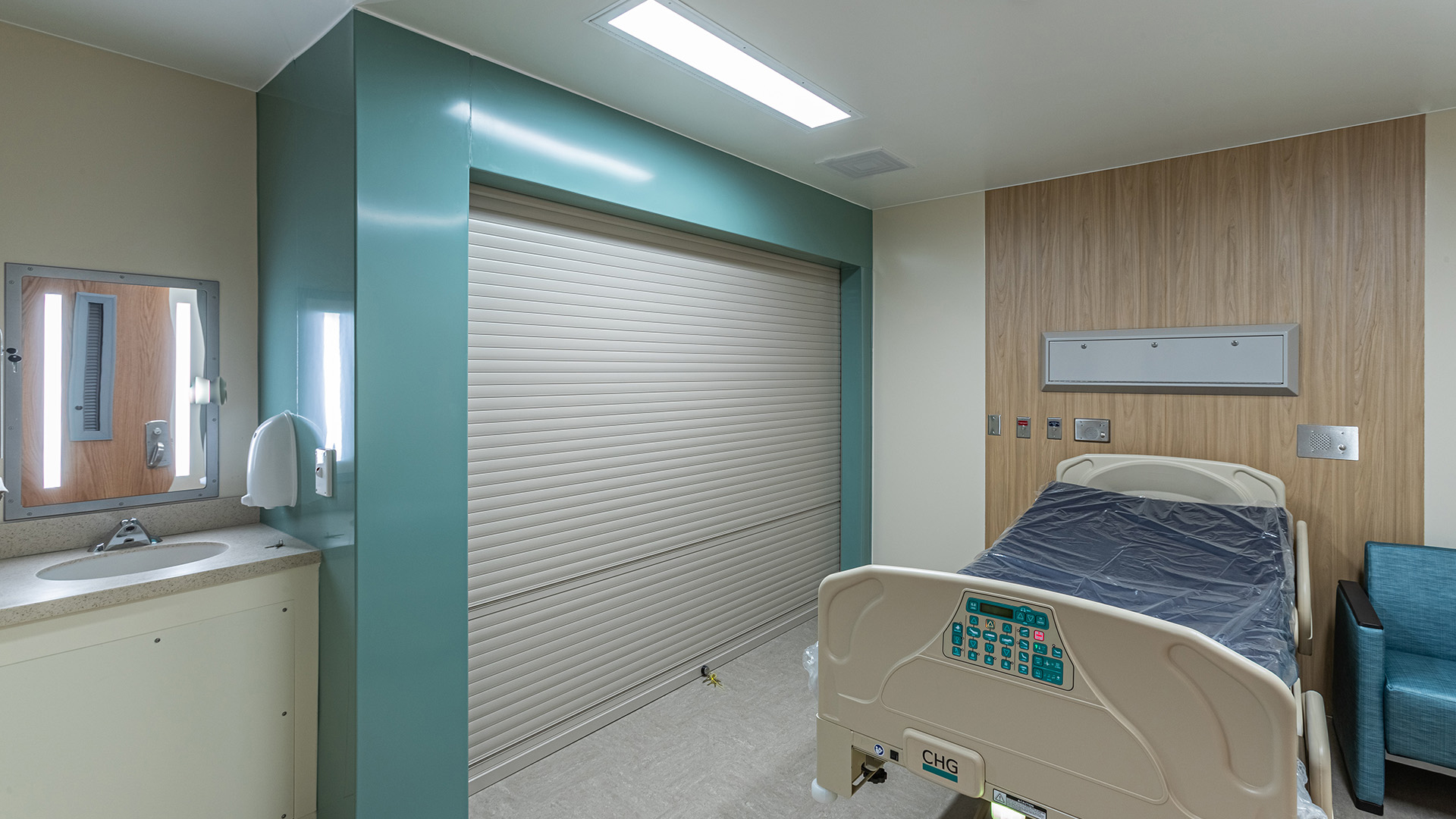
For healthcare engineers, these are not abstract design questions. Behavioral health spaces change the specification for nearly every system in the room: ligature-resistant plumbing fixtures, diffusers, sprinkler heads and door hardware; concealed or protected medical gas and electrical outlets; lighting and temperature controls patients can safely adjust; acoustics that soften an inherently loud environment; and nurse call, duress and camera systems that support observation without making patients feel watched.
That does not mean existing buildings should be avoided. In fact, adaptive reuse may be one of the most important tools available to healthcare organizations trying to expand behavioral health access with limited resources. But the question should not simply be, “Where do we have space?”
It should be, “Can this space support the care we are trying to provide or what risks may we be taking on by renovating this space?”
Starting With People, Not Floor Plans
Not every behavioral health crisis requires an emergency department or inpatient psychiatric hospitalization, and the space between those two settings represents an opportunity to rethink both the model of care and the environments supporting it.
For architects, engineers, facility leaders and healthcare planners, that means the conversation cannot begin with a room list or an available floor plan. It needs to begin by understanding the people, the care model and the journey through crisis.
A consistent set of questions helps frame that conversation: Who will arrive? How will they arrive? What do they need during the first few hours? What does stabilization look like? How do staff safely support them? Where do they go next? What will it take to operate and maintain this environment safely for the next 20 years? Only with those answers in hand does the right environment come into focus.
The answer will not look the same in every community. As behavioral health crisis care continues to evolve, we are committed to helping healthcare organizations ensure the spaces that support it evolve as thoughtfully as the care itself.
We will be exploring these questions, and what we have learned from emergency department and crisis stabilization projects across the Midwest, at the Midwest Healthcare Engineering Conference, Nov. 8–10, 2026, in Indianapolis. We hope you will join the conversation.
_____________________________________________________
References
Baxter, S. (2026, July 24). 4 years later, 988 Suicide and Crisis Lifeline shows successes and opportunities for improvement. The Pew Charitable Trusts. https://www.pew.org/en/research-and-analysis/articles/2026/07/24/4-years-later-988-suicide-and-crisis-lifeline-shows-successes-and-opportunities-for-improvement
Burns, A., Ortaliza, J., Lo, J., Rae, M., & Cox, C. (2025, August 20). How will the 2025 reconciliation law affect the uninsured rate in each state? KFF. https://www.kff.org/uninsured/how-will-the-2025-reconciliation-law-affect-the-uninsured-rate-in-each-state/
Centers for Disease Control and Prevention. (2025, June 26). FastStats: Emergency department visits. National Center for Health Statistics. https://www.cdc.gov/nchs/fastats/emergency-department.htm
Chatterjee, R. (2025, August 15). Children in a mental health crisis can spend days languishing in the ER. NPR, via Michigan Public. https://www.michiganpublic.org/2025-08-15/children-in-a-mental-health-crisis-can-spend-days-languishing-in-the-er
Martin, M. (2024, April 29). New approach to mental health issues: 24/7 behavioral health center opening in GR. FOX 17 WXMI. https://fox17online.com/news/local-news/new-approach-to-mental-health-issues-24-7-behavioral-health-center-opening-in-gr
Ruder, E. (2026a, August 12). How 1 unit cut UK HealthCare’s ED boarding time 92%. Becker’s Hospital Review. https://www.beckershospitalreview.com/care-coordination/how-1-uk-healthcare-unit-cut-ed-boarding-time-92/
Ruder, E. (2026b, August 24). What is an EmPATH unit? Inside the model reshaping psychiatric emergency care. Becker’s Hospital Review. https://www.beckershospitalreview.com/care-coordination/what-is-an-empath-unit-inside-the-model-reshaping-psychiatric-emergency-care/
Substance Abuse and Mental Health Services Administration. (2025). 2025 national guidelines for a behavioral health coordinated system of crisis care (Publication No. PEP24-01-037). U.S. Department of Health and Human Services. https://www.samhsa.gov/mental-health/national-behavioral-health-crisis-care


